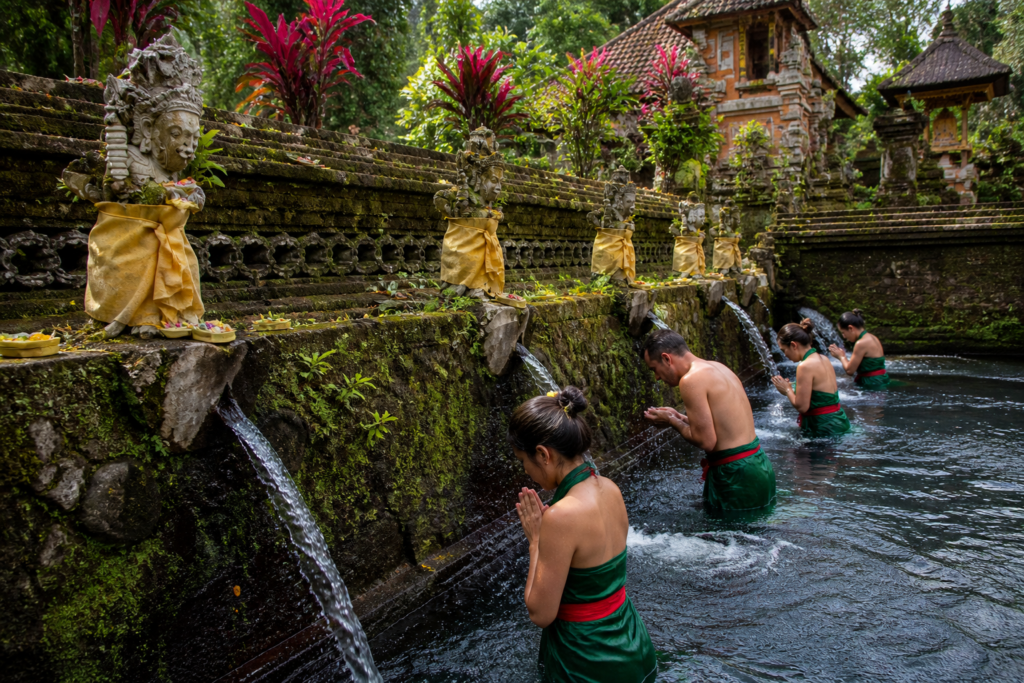
Bali is often described through its beaches, rice fields, and temples — but for many, the deeper experience begins with something less visible.
Melukat is a traditional Balinese purification ritual, practiced for centuries as a way to cleanse both body and mind. While many visitors head to crowded temples, there are quieter places where the experience feels more grounded.
Just north of Ubud, Sebatu offers a different setting — one that is slower, less crowded, and closely connected to Bali’s highland villages.
What Is Melukat?
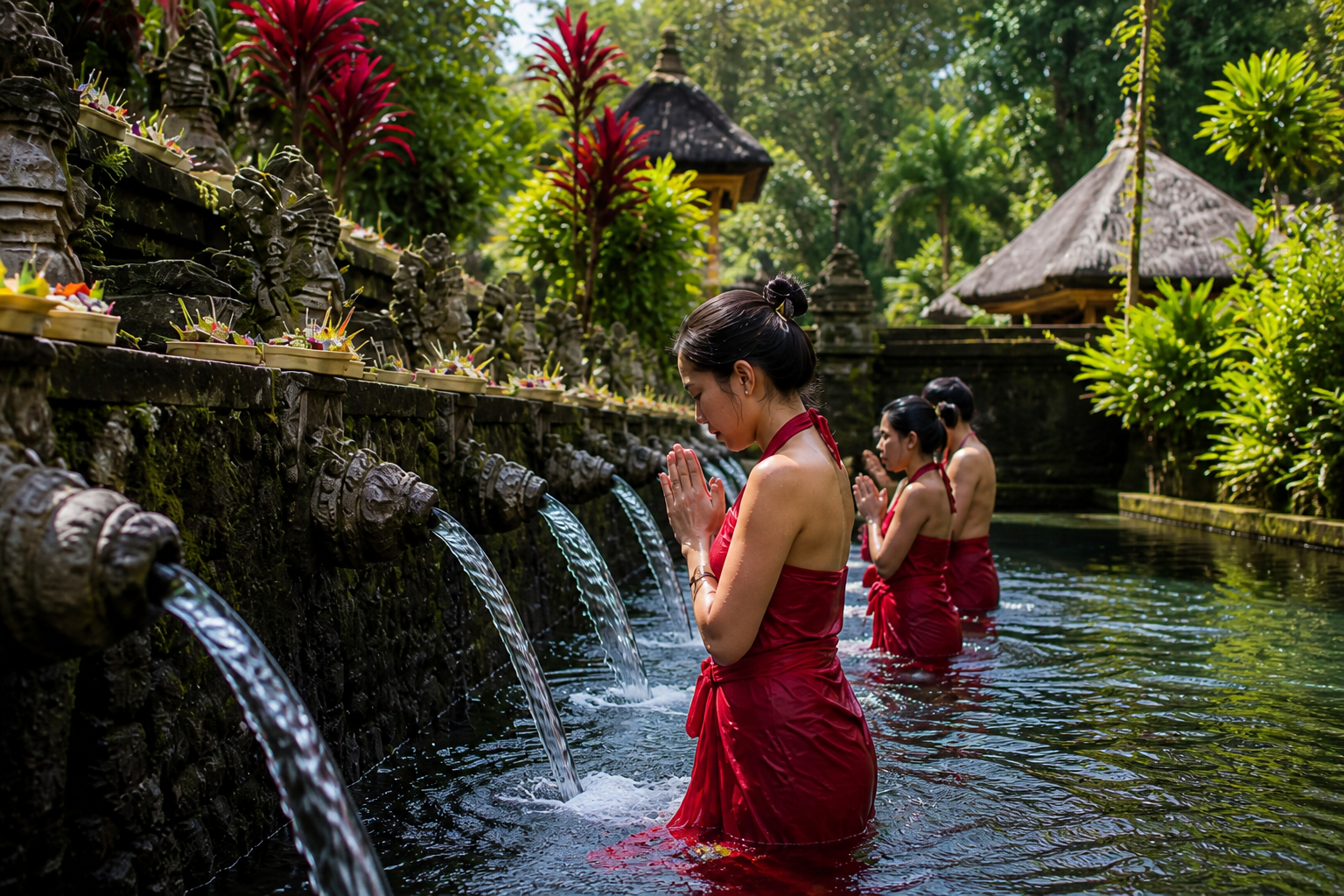
Melukat is a water purification ritual in Balinese Hindu tradition. It is believed to cleanse negative energy, restore balance, and bring clarity.
The ritual typically involves:
- offering prayers
- wearing traditional attire
- moving through a series of water fountains
- moments of quiet reflection
While spiritual in origin, many visitors experience melukat in a personal way — as a pause, a reset, or simply a moment to reconnect.
Why Sebatu Offers a Different Experience
Most travelers associate melukat with Tirta Empul Temple — one of Bali’s most well-known water temples.
But just a short distance away, Sebatu presents a quieter alternative.
Here, the atmosphere feels:
- less rushed
- more local
- more connected to nature
Surrounded by greenery and village life, the experience is not just about the ritual itself — but about the space around it.
It’s a place where the pace naturally slows down.
Where to Do Melukat in Sebatu
Pura Gunung Kawi Sebatu
One of the most serene water temples in the area, Gunung Kawi Sebatu is known for its clear spring water, stone carvings, and peaceful surroundings.
Compared to more popular temples, it offers:
- a calmer environment
- fewer crowds
- a more contemplative atmosphere
It’s a place where visitors often take their time, moving through the ritual without feeling hurried.
Pasiraman Dalem Pingit
Less known and more understated, Pasiraman Dalem Pingit feels closer to a local sacred site than a tourist destination.
Here, the experience is quieter, simpler, and more intimate.
For those seeking something less structured and more reflective, this can feel especially meaningful.
What to Expect During the Ritual
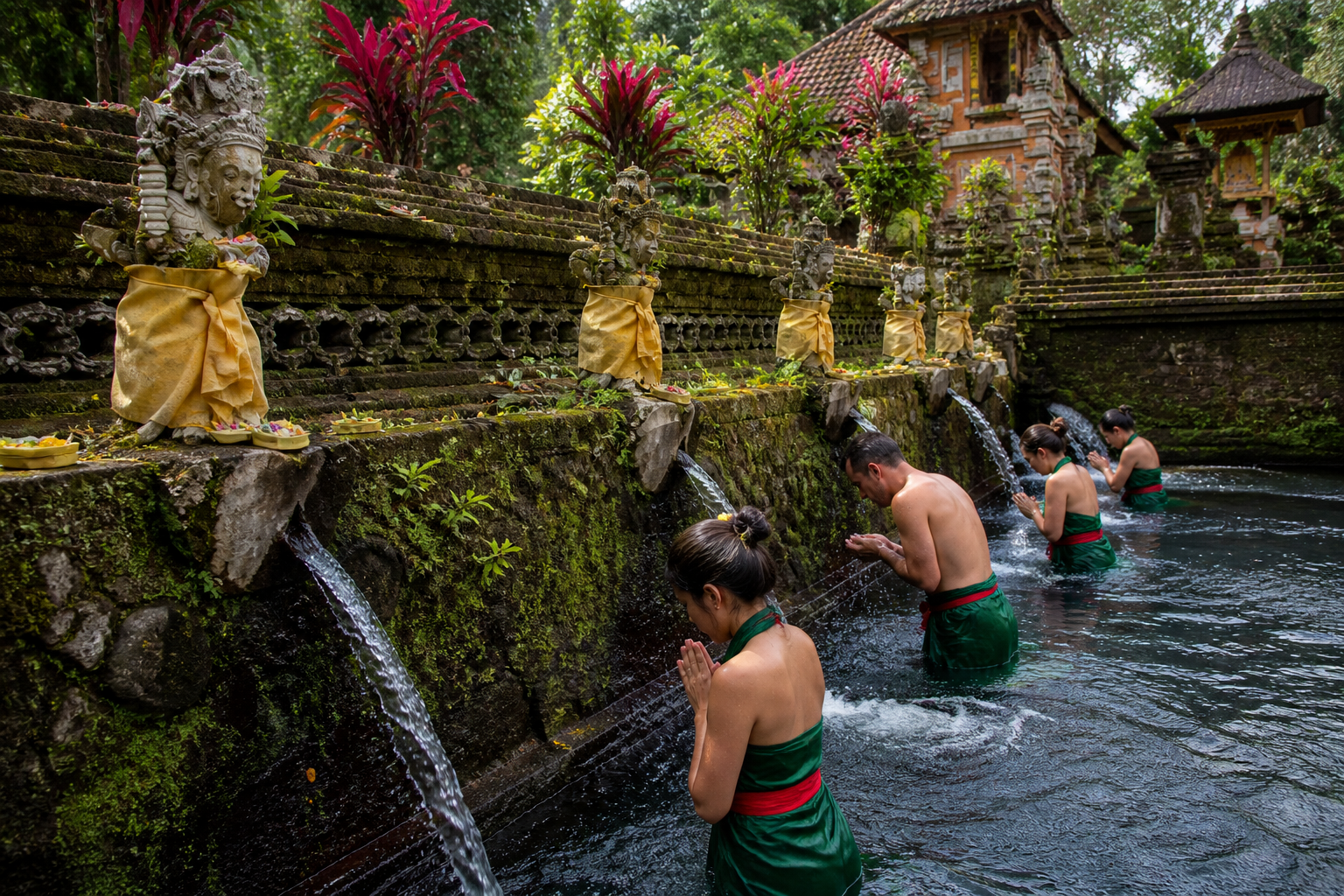
While each temple may have slight variations, the general flow of melukat remains similar.
Visitors are usually guided through:
- preparation and offerings
- entering the water
- moving through a sequence of fountains
- moments of stillness
It’s not something to rush.
Some move quickly, others stay longer — the experience naturally adapts to each person.
Tips Before You Go
- Wear or rent proper temple attire (sarong and sash)
- Be respectful of local customs and rituals
- Visit earlier in the day for a quieter experience
- Avoid treating it purely as a photo opportunity
- Allow time before and after — not just the ritual itself
Melukat is not just an activity.
It’s a moment within a larger journey.
After the Ritual: Taking a Moment to Pause
After stepping out of the water, many people feel a shift — subtle, but noticeable.
Some feel lighter.
Others simply feel quiet.
Just a few minutes away, SikiSiki Lounge offers a place to sit, breathe, and take that moment in.
Located in Sebatu, the space is designed as a gentle transition — not a destination, but a pause.
A simple drink.
A slower pace.
Nothing more than what’s needed.
A Different Side of Bali
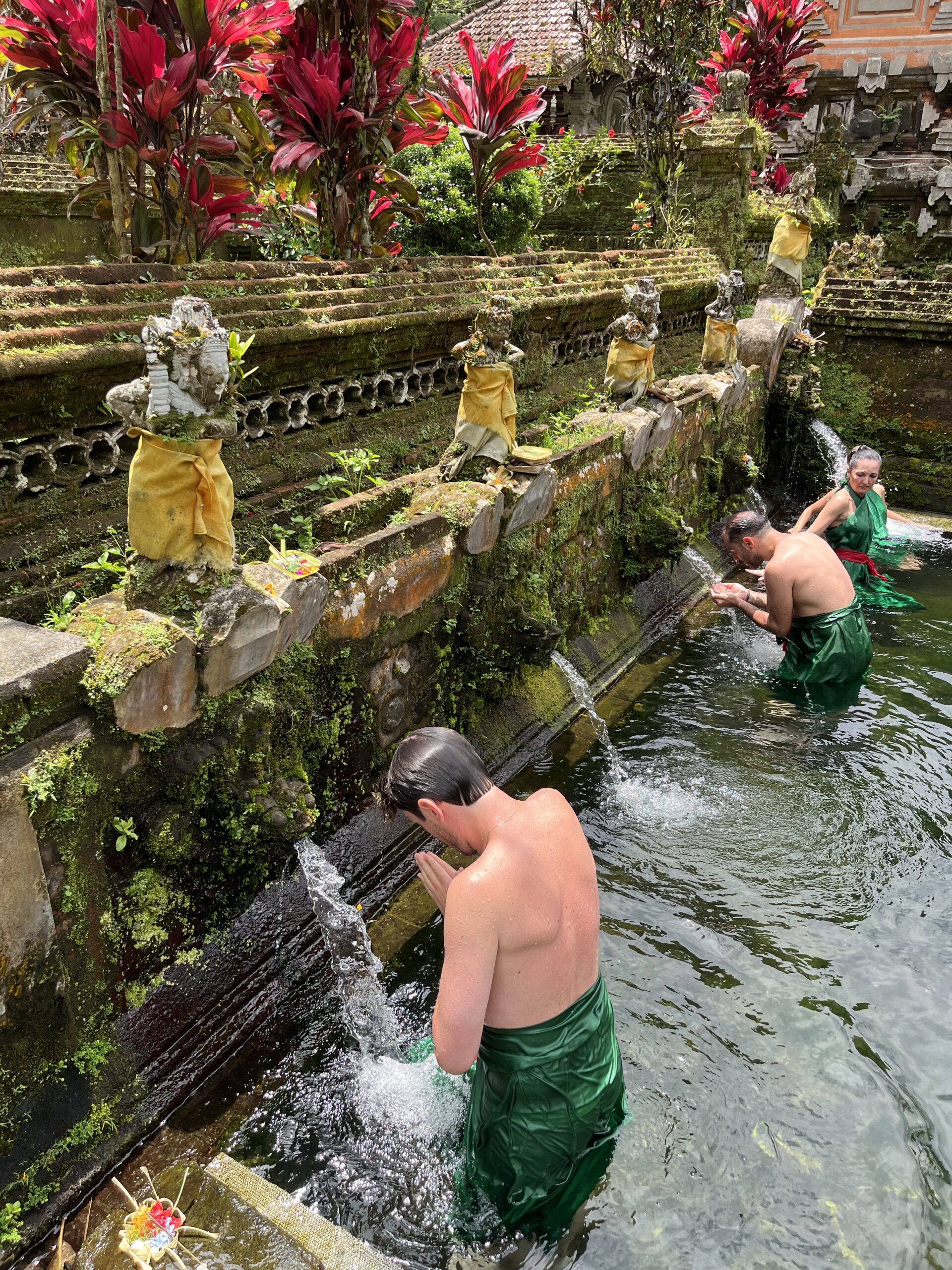
For those exploring beyond central Ubud, Sebatu offers a different rhythm.
Not louder.
Not more exciting.
Just quieter — and often, more meaningful.
And sometimes, that’s exactly what makes the experience stay with you.